

In this article
InterviewCue vs Final Round AI is a useful comparison because both products sit in the AI interview workflow, but they are not framed the same way in public. Software engineers comparing them usually want to know whether they need structured technical practice, an AI mock interview workflow, a role-aware live interview assistant, or a broader AI interview copilot experience that stays active during the live round itself.
The comparison is most helpful when it stays concrete. Based on public product pages available on June 15, 2026, Final Round AI emphasizes real-time interview support, invisible assistance during live interviews, role-specific mock interviews, and post-interview feedback. InterviewCue is better understood through its technical-prep lens: role-specific content, practical interview frameworks, and credibility-oriented support for engineers who want to build confidence before and during technical interviews.
Key differences at a glance
The clearest answer to what is the difference between InterviewCue and Final Round AI is that the two brands lead with different promises.
Final Round AI publicly leads with:
- Real-time interview help during live interviews.
- Invisible background assistance while screen sharing.
- AI-generated answers based on role and resume context.
- Mock interviews and post-interview reporting.
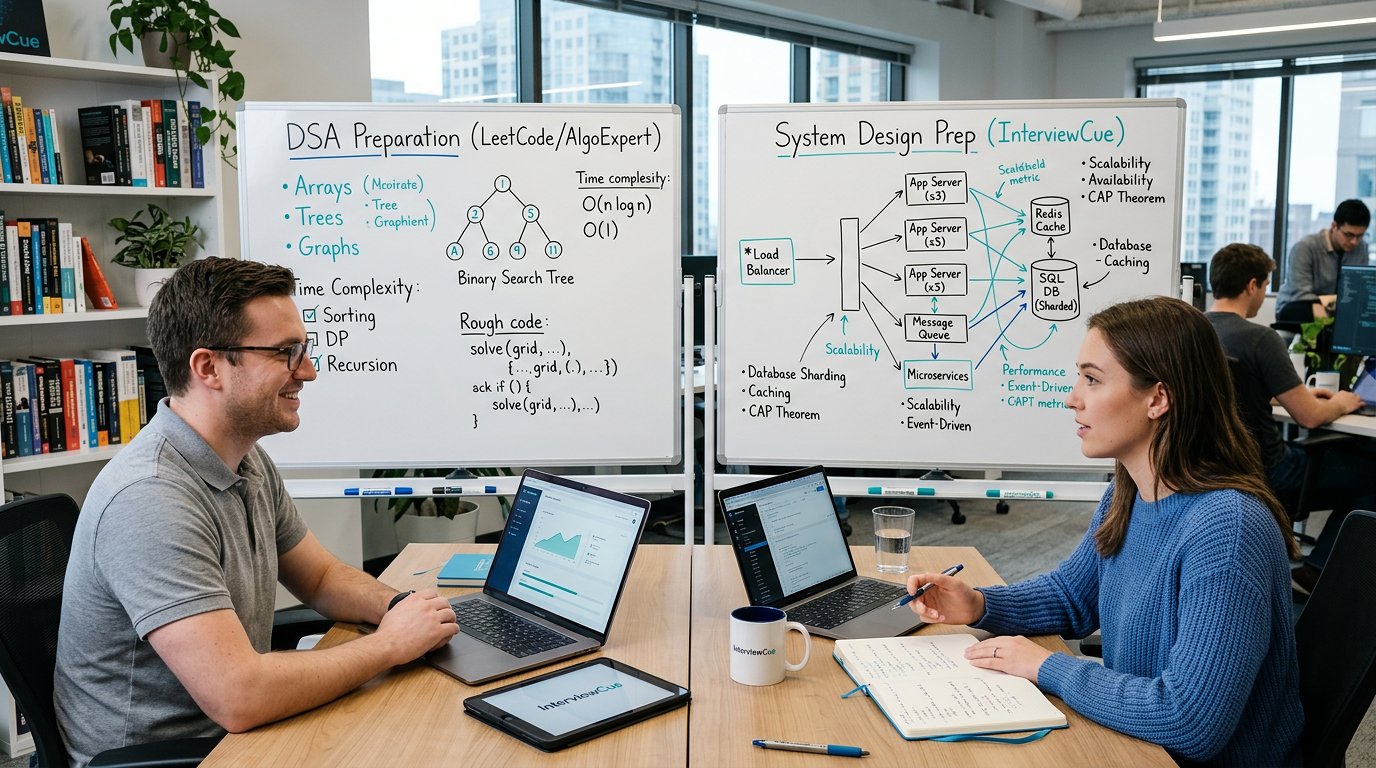
InterviewCue is better for candidates who want a preparation workflow grounded in software engineer interview prep, technical role specificity, and repeatable frameworks across coding, system design, and behavioral rounds. That makes it a better fit for candidates who do not want a generic interview tool, but a technical interview practice workflow that feels native to software roles.
How the two workflows compare
An InterviewCue vs Final Round AI comparison should focus on user intent more than slogans.
| Comparison point | InterviewCue | Final Round AI |
|---|---|---|
| Primary public positioning | Technical interview preparation for software candidates | Real-time assistance across live interviews |
| Preparation focus | Coding, system design, and behavioral practice | Role-specific mock interviews and answer generation |
| Best suited to | Candidates building repeatable technical frameworks | Candidates prioritizing support during the live round |
| Decision question | Do you need deeper technical preparation structure? | Do you need more help while the interview is happening? |
If you want a tool that publicly markets invisible live help, Final Round AI is the clearer match from its own homepage. If you want a workflow centered on preparation quality, concrete interview scenarios, and links between behavioral interview for engineers, system design interview, and live coding interview assistant style practice, InterviewCue has the more content-led angle.
That difference matters because many software candidates do not actually have one problem. They have three:
- They need a better framework for technical answers.
- They need repeated practice on role-specific questions.
- They need enough confidence to stay structured in the actual interview.
InterviewCue is strongest when you want those three needs connected instead of split across unrelated tools. Candidates looking for a Final Round AI alternative for software engineers are often looking for exactly that: something that feels more grounded in technical preparation and less dependent on one high-pressure live workflow.
Which workflow fits software engineer interviews?
InterviewCue vs Final Round AI for software engineer interviews becomes clearer when you break the interview loop into stages.
For coding and backend preparation, candidates often need role-specific drills that connect code, architecture, and tradeoffs. For system design, they need a structured way to rehearse clarifying questions, failure modes, and business constraints. For behavioral rounds, they need answers that sound like real engineering work rather than HR templates.
That is where InterviewCue benefits from its broader technical-prep framing. It can connect software engineer interview prep, behavioral interview for engineers, and system design interview content in one workflow. Final Round AI, by contrast, is publicly much more direct about live assistance and answer generation during the actual interview process.
Neither framing is inherently better for everyone. The right choice depends on whether you need deeper preparation structure, stronger live support, or both. The mistake is choosing a tool before you know which part of the interview loop is actually weak.
Five questions to ask before choosing
An InterviewCue vs Final Round AI review should test five things:
- How technical the practice actually feels for software roles.
- Whether the tool supports coding, system design, and behavioral rounds together.
- How much of the value comes before the live interview versus during it.
- Whether the feedback helps you improve the next answer.
- Whether the workflow makes you more confident without making you sound scripted.
That last point matters. Many engineers do not need longer answers. They need clearer ones. A good technical interview coach style workflow should surface where your logic breaks, where you over-explain, and where you are skipping the tradeoff that the interviewer actually cares about.
A practical decision guide
Use this short InterviewCue vs Final Round AI guide before you choose:
- List which rounds are hardest for you right now: coding, system design, behavioral, or live delivery.
- Decide whether you need more structured prep, more live support, or both.
- Compare how each workflow handles software-specific scenarios, not just generic interview prompts.
- Check whether the tool improves clarity, not only speed.
- Pick the workflow that matches your real bottleneck instead of the loudest marketing promise.
The best InterviewCue vs Final Round AI decision comes from matching the tool to your actual interview gap. InterviewCue works best when you want a technical-prep system that builds confidence through structured practice, which is why InterviewCue vs Final Round AI is ultimately a decision about the kind of software interview help you need most.